 1:51 PM
 admin
admin

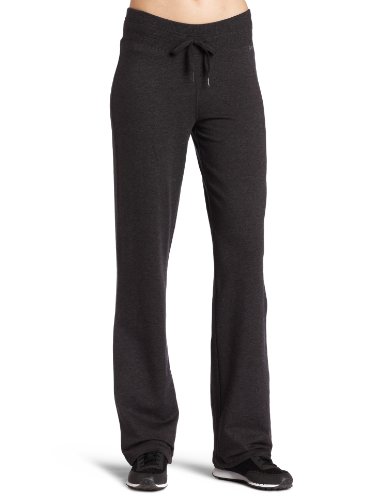
- Relaxed fit pant
- Drawcord waist



 |  |  |
 |  |  |
| | | |
| | |
| |  | |
| | |

How did this film initially come about?
Kenner: Eric Schlosser and I had been wanting to do a documentary version of his book, Fast Food Nation. And, for one reason or another, it didn't happen. By the time Food, Inc. started to come together, we began talking and realized that all food has become like fast food, and all food is being created in the same manner as fast food.
How has fast food changed the food we buy at the supermarket?
Schlosser: The enormous buying power of the fast food industry helped to transform the entire food production system of the United States. So even when you purchase food at the supermarket, you’re likely to be getting products that came from factories, feedlots and suppliers that emerged to serve the fast food chains.
How many years did it take to do this film and what wer! e the ch allenges?
Kenner: From when Eric and I began talking, about 6 or 7 years. The film itself about 2 ½ years. It has taken a lot longer than we expected because we were denied access to so many places.
Pearlstein: When Robby brought me into the project, he was adamant about wanting to hear all sides of the story, but it was nearly impossible to gain access onto industrial farms and into large food corporations. They just would not let us in. It felt like it would have been easier to penetrate the Pentagon than to get into a company that makes breakfast cereal. The legal challenges on this film were also unique. We found it necessary to consult with a first amendment lawyer throughout the entire filming process.
Who or what influenced your film?
Kenner: This film was really influenced by Eric Schlosser and Fast Food Nation, but then as we were progressing ! and had actually gotten funding, it became very influenced as well by Michael Pollan and his book Omnivore’s Dilemma.Â
And then, as we went out into the world, we became really incredibly influenced by a lot of the farmers we met.
What was the most surprising thing you learned?
Kenner: As we set out to find out how our food was made, I think the thing that really became most shocking is when we were talking to a woman, Barbara Kowalcyk, who had lost her son to eating a hamburger with E. coli, and she’s now dedicated her life to trying to make the food system safer. It’s the only way she can recover from the loss of her child. But when I asked her what she eats, she told me she couldn't tell me because she would be sued if she answered.
Or we see Carol possibly losing her chicken farm … or we see Moe, a seed cleaner who’s just being sued for amounts that there’s no way he can pay, even thoug! h he’s not guilty of anything. Then we realized there’s ! somethin g going on out there that supersedes foods. Our rights are being denied in ways that I had never imagined. And it was scary and shocking. And that was my biggest surprise.
So, what does our current industrialized food system say about our values as a nation?
Pollan: It says we value cheap, fast and easy when it comes to food like so many other things, and we have lost any connection to where our food comes from.
Kenner: I met a cattle rancher and he said, you know, we used to be scared of the Soviet Union or we used to think we were so much better than the Soviet Union because we had many places to buy things. And we had many choices. We thought if we were ever taken over, we’d be dominated where we’d have to buy one thing from one company, and how that’s not the American way. And he said you look around now, and there’s like one or two companies dominating everything in the food world. We’ve become what ! we were always terrified of.
And that just always haunted me â€" how could this happen in America? It seems very un-American that we would be so dominated, and then so intimidated by the companies that are dominating this marketplace.
How has the revolving door relationship between giant food companies and Washington affected the food industry?
Pearlstein: We discovered that the food industry has managed to shape a lot of laws in their favor. For example, massive factory farms are not considered real factories, so they are exempt from emissions standards that other factories face. A surprising degree of regulation is voluntary, not mandatory, which ends up favoring the industry.Â
What have been the consequences for the American consumer?
Kenner: Most American consumers think that we are being protected. But that is not the case. Right now the USDA does not have the authority to shut down a plant ! that is producing contaminated meat. The FDA and the USDA ha! ve had t heir inspectors cut back. And it’s for these companies now to self-police, and what we’ve found is, when there’s a financial interest involved, these companies would rather make the money and be sued than correct it. Self-policing has really just been a miserable failure. And I think that's been really quite harmful to the American consumer and to the American worker.Â
Pearlstein: The food industry has succeeded in keeping some very important information about their products hidden from consumers. It’s outrageous that genetically modified foods don’t need to be labeled. Today more than 70% of processed foods in the supermarket are genetically modified and we have absolutely no way of knowing. Whatever your position, you should have the right to make informed choices, and we don’t. Now the FDA is contemplating whether or not to label meat and milk from cloned cows. It seems very basic that consumers should have the right t! o know if they’re eating a cloned steak.
Is it possible to feed a nation of millions without this kind of industrialized processing?
Pollan: Yes. There are alternative ways of producing food that could improve Americans’ health. Quality matters as much as quantity and yield is not the measure of a healthy food system. Quantity improves a population’s health up to a point; after that, quality and diversity matters more. And it’s wrong to assume that the industrialized food system is feeding everyone well or keeping the population healthy. It’s failing on both counts.
There is a section of the film that reveals how illegal immigrants are the faceless workers that help to bring food to our tables. Can you give us a profile of the average worker?
Schlosser: The typical farm worker is a young, Latino male who does not speak English and earns about $10,000 a year. The typical meatpacking worker ha! s a similar background but earns about twice that amount. A ! very lar ge proportion of the nation’s farm workers and meatpackers are illegal immigrants.
Why are there so many Spanish-speaking workers?
Kenner: The same thing that created obesity in this country, which is large productions of cheap corn, has put farmers out of work in foreign countries, whether it’s Mexico, Latin America or around the world. And those farmers can no longer grow food and compete with the U.S.’ subsidized food. So a lot of these farmers needed jobs and ended up coming into this country to work in our food production.
And they have been here for a number of years. But what’s happened is that we’ve decided that it’s no longer in the best interests of this country to have them here. But yet, these companies still need these people and they’re desperate, so they work out deals where they can have a few people arrested at a certain time so it doesn’t affect production. But it affects people’s lives. And ! these people are being deported, put in jail and sent away, but yet, the companies can go on and it really doesn’t affect their assembly line. And what happens is that they are replaced by other, desperate immigrant groups.
Could the American food industry exist without illegal immigrants?
Schlosser: The food industry would not only survive, but it would have a much more stable workforce. We would have much less rural poverty. And the annual food bill of the typical American family would barely increase. Doubling the hourly wage of every farm worker in this country might add $50 at most to a family’s annual food bill.
What are scientists doing to our food and is it about helping food companies’ bottom line or about feeding a growing population?
Schlosser: Some scientists are trying to produce foods that are healthier, easier to grow, and better for the environment. But most of the food scientists ar! e trying to create things that will taste good and can be made! cheaply without any regard to their social or environmental consequences.
I am not opposed to food science. What matters is how that science is used … and for whose benefit.
Can a person eat a healthy diet from things they buy in the supermarket if they are not buying organic? If so, how?
Pollan: Yes, the supermarkets still carry real food. The key is to shop the perimeter of the store and stay out of the middle where most of the processed food lurks.
How are low-income families impacted at the supermarket?
Kenner: Things are really stacked against low-income families in this country. There is a definite desire of the food companies to sell more product to these people because they have less time, they’re working really hard and they have fewer hours in their day to cook. And the fast food is very reasonably priced. Coke is selling for less than water. So when these things are happening, it’s easi! er for low-income families sometimes to just go in and have a quick meal if they don’t get home until 10 o’clock at night. At the moment, our food is unfairly priced towards bad food.
And, in the same way that tobacco companies went after low-income people because they were heavy users, food companies are going after low-income people because they can market to them, they can make it look very appealing.
What can low-income families do to eat healthier?
Schlosser: As much as possible, they can avoid cheap, processed foods and fast foods. It’s possible to eat well and inexpensively. But it takes more time and effort to do so, and that’s not easy when you’re working two jobs and trying to just to keep your head above water. The sad thing is that these cheap foods are ultimately much more expensive when you factor in the costs of all the health problems that come later.
Pollan: It’s possible to ! eat healthy food on a budget but it takes a greater investment! of time . If you are willing to cook and plan ahead, you can eat local, sustainable food on a budget.
If someone wanted to get involved and help change the system, what would you suggest they do?
Pearlstein: I hope people will want to be more engaged in the process of eating and shopping for food. We have learned that there are a lot of different fronts to fight on this one, and people can see what most resonates with them. Maybe it’s really just “voting with their forks†â€" eating less meat, buying different food, buying from companies they feel good about, going to farmers markets.
People can try to find a CSA â€" community supported agriculture â€" where you buy a share in a farm and get local food all year. That really helps support farmers and you get fresh, seasonal food. On the local political level, people can work on food access issues, like getting more markets into low income communities, getting better lunch program! s in schools, trying to get sodas out of schools. And on a national level, we’ve learned that reforming the Farm Bill would have a huge influence on our food system. It requires some education, but it is something we should care about.
What do you hope people take away from this film?
Schlosser: I hope it opens their eyes.
Kenner: That things can change in this country. It changed against the big tobacco companies. We have to influence the government and readjust these scales back into the interests of the consumer. We did it before, and we can do it again.
Pollan: A deeper knowledge of where their food comes from and a sense of outrage over how their food is being produced and a sense of hope and possibility of the alternatives springing up around the country. Food, Inc. is the most important and powerful film about our food system in a generation.
For most Americans, the ! ideal meal is fast, cheap, and tasty. Food, Inc. examin! es the c osts of putting value and convenience over nutrition and environmental impact. Director Robert Kenner explores the subject from all angles, talking to authors, advocates, farmers, and CEOs, like co-producer Eric Schlosser (Fast Food Nation), Michael Pollan (The Omnivore's Dilemma), Gary Hirschberg (Stonyfield Farms), and Barbara Kowalcyk, who's been lobbying for more rigorous standards since E. coli claimed the life of her two-year-old son. The filmmaker takes his camera into slaughterhouses and factory farms where chickens grow too fast to walk properly, cows eat feed pumped with toxic chemicals, and illegal immigrants risk life and limb to bring these products to market at an affordable cost. If eco-docs tends to preach to the converted, Kenner presents his findings in such an engaging fashion that Food, Inc. may well reach the very viewers who could benefit from it the most: harried workers who don't have the time or income to read every book and eat ! non-genetically modified produce every day. Though he covers some of the same ground as Super-Size Me and King Corn, Food Inc. presents a broader picture of the problem, and if Kenner takes an understandably tough stance on particular politicians and corporations, he's just as quick to praise those who are trying to be responsible--even Wal-Mart, which now carries organic products. That development may have more to do with economics than empathy, but the consumer still benefits, and every little bit counts. --Kathleen C. Fennessy


There are a few new characters: Sharpay's personal assistant Tiara Gold (Jemma McKenzie-Brown), and Troy's hangers-on, Rocket Man (Matt Prokop) and Donny Dion (Justin Martin), who may give the franchise life beyond its original cast (if they make some headway in the likability department). But it's all about the songs and the dances. Ryan and Sharpay sizzle in a classic-musical tribute "I Want It All"; Troy and Gabriella share a rooftop waltz in "Can I Have This Dance"; and Troy and Chad blow off steam in a salvage yard in "The Boys Are Back." "Now or Never" is this film's "sports song," and Troy and Gabriella have their big duet "Just Wanna Be With You" and their own showcases, in "Scream" and "Walk Away," respectively. If the closing anthem, "High School Musical," seems on the self-congratulatory side, it's a rare misstep in a series that has made a generation of tweens (especially girls) sing and dance ! and realize they can be whatever they want to be. --David ! Horiuchi
Stills from High School Musical 3: Senior Year (Click for larger image)
 |  |  |
 |  |  |
 |  |  |


